

The collection
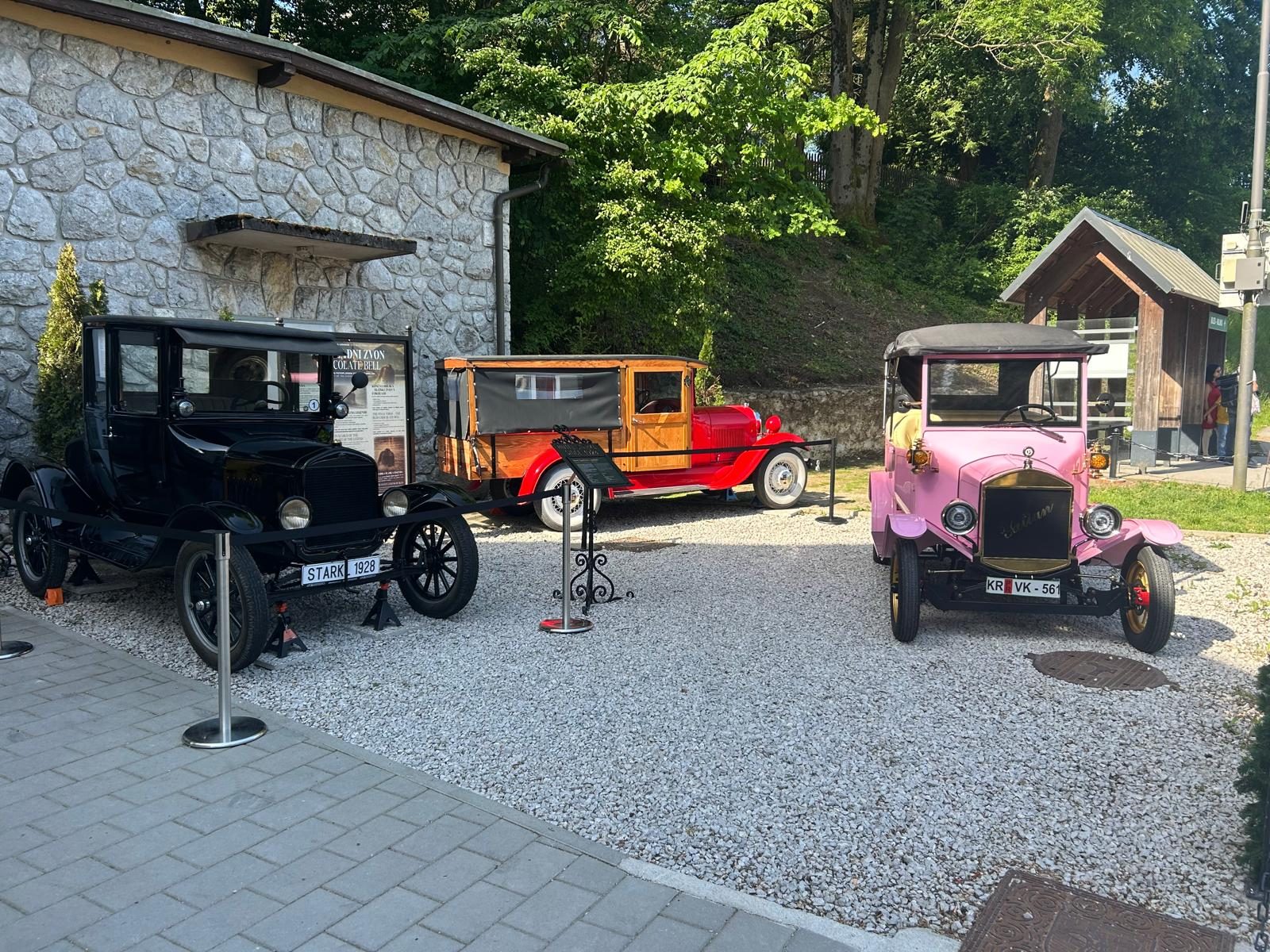
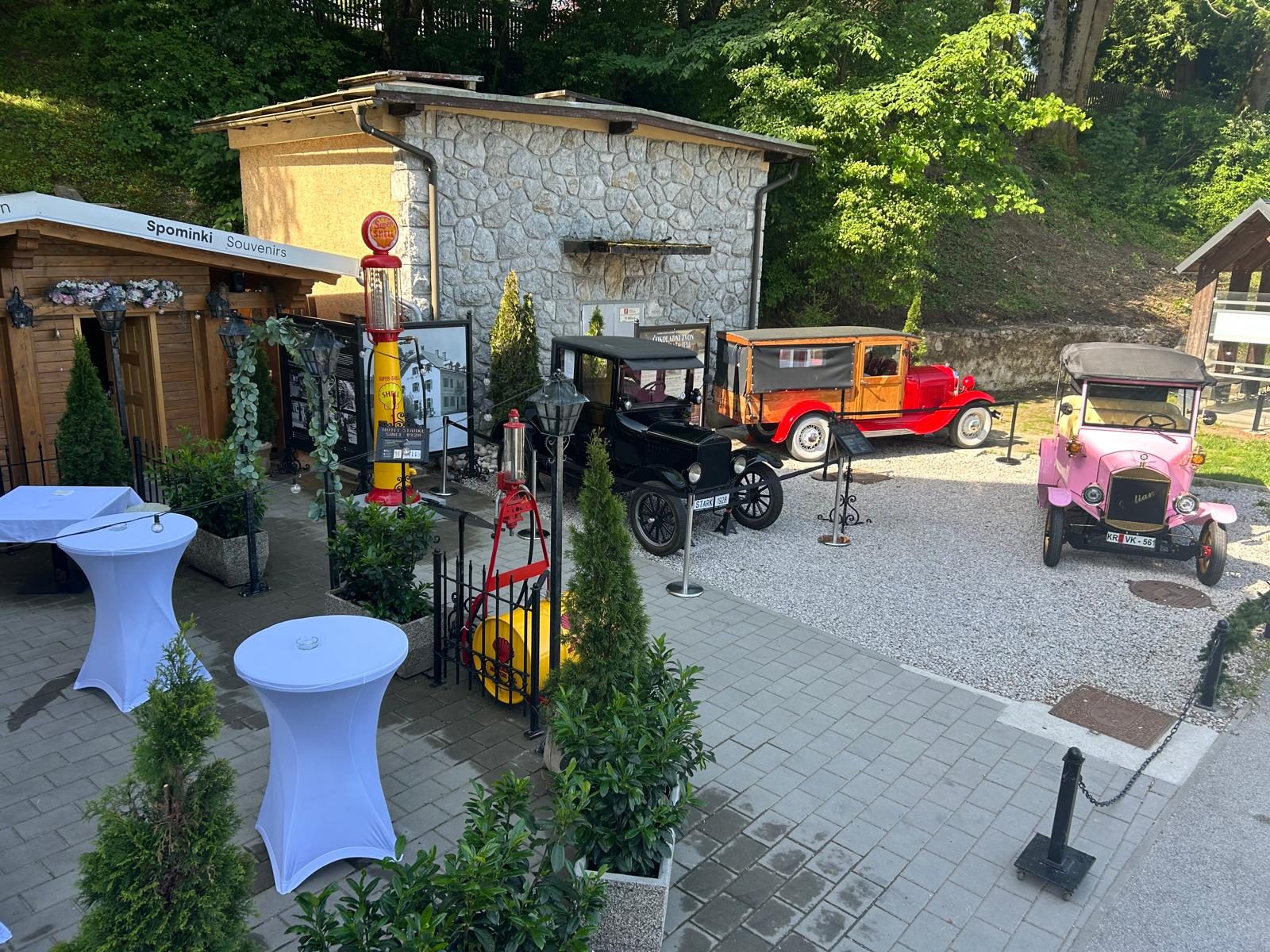
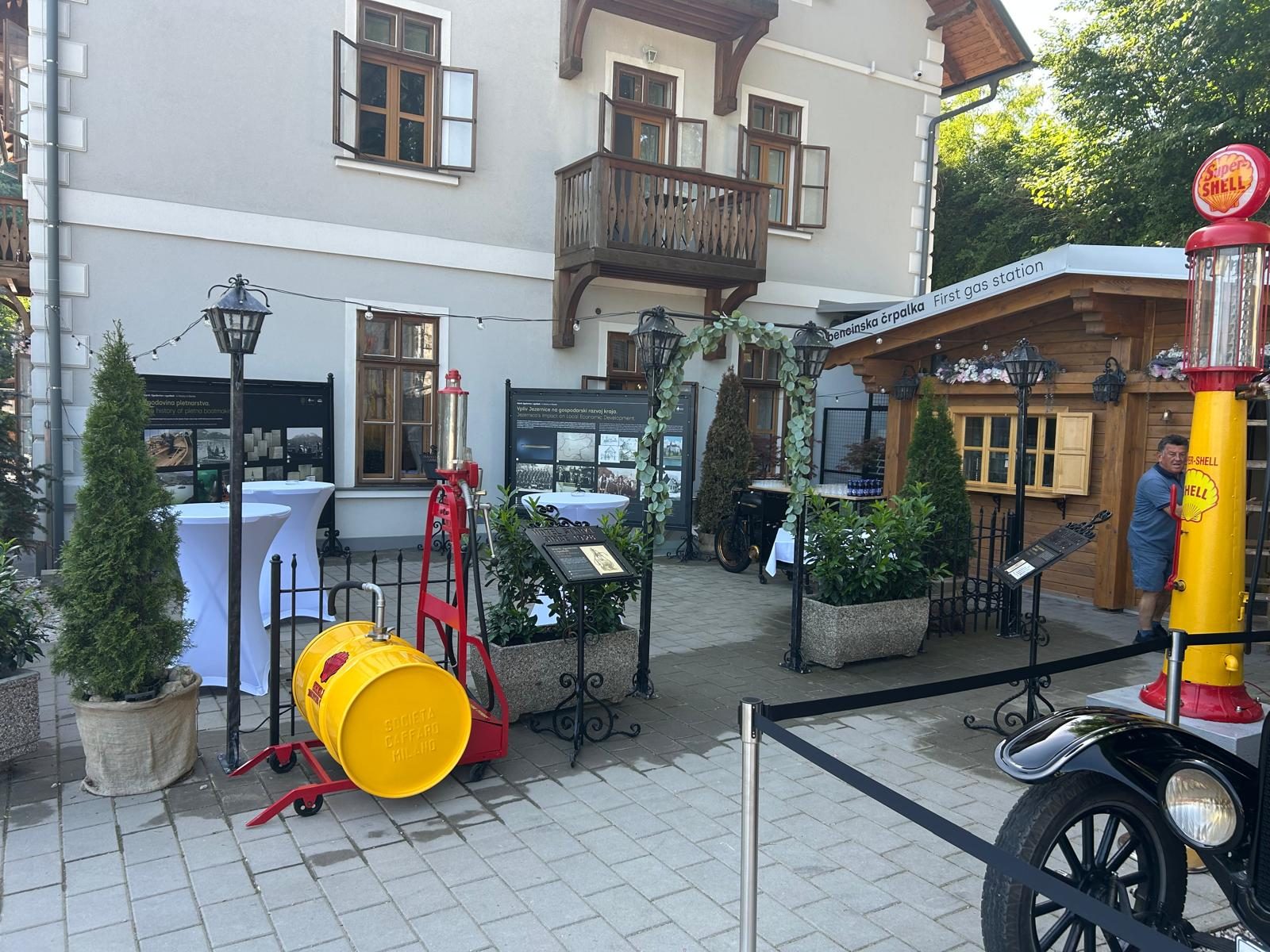
A pump, two Fords and panels beside Hotel Starkl. The panel texts are in Slovenian and English.
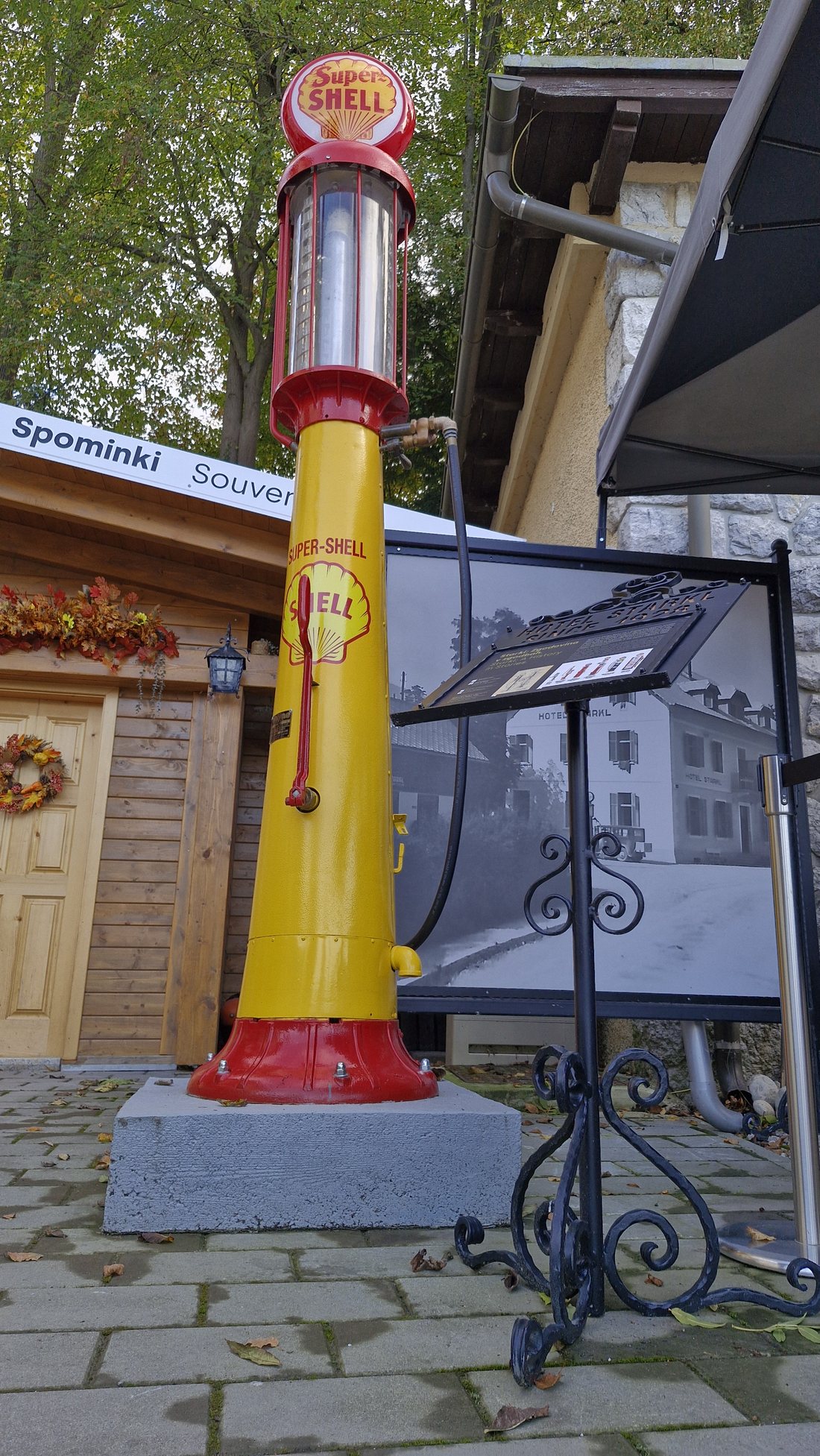
The Wayne 615 pump
The Wayne 615 fuel pump, model year 1925, was the most widespread pump of the 1920s and 1930s. With its 10-gallon glass measuring cylinder it is one of the most iconic pumps produced between 1920 and 1930. The model on display is the only documented example of its kind in Slovenia. The Wayne 615 was most commonly produced between 1924 and 1929. It features a 10-gallon glass container, an approximate height of 3 meters, a distinctive globe on top, and manual operation. Its cast iron construction provided stability and a considerable weight of around 330 kilograms.
How it worked: a hand lever pumped fuel from an underground tank up into the glass container on top of the pump, the quantity was read from the scale, and then a valve was opened so that the fuel flowed down a hose into the car's tank by gravity.
At a glance
- Model year
- 1925
- Era
- 1920 – 1930
- Most produced
- 1924 – 1929
- Height
- approx. 3 m
- Weight
- approx. 330 kg
- Container
- 10-gallon glass
- Restoration
- 2021, Mauro Favaro, Milan
From the pump to the handcart
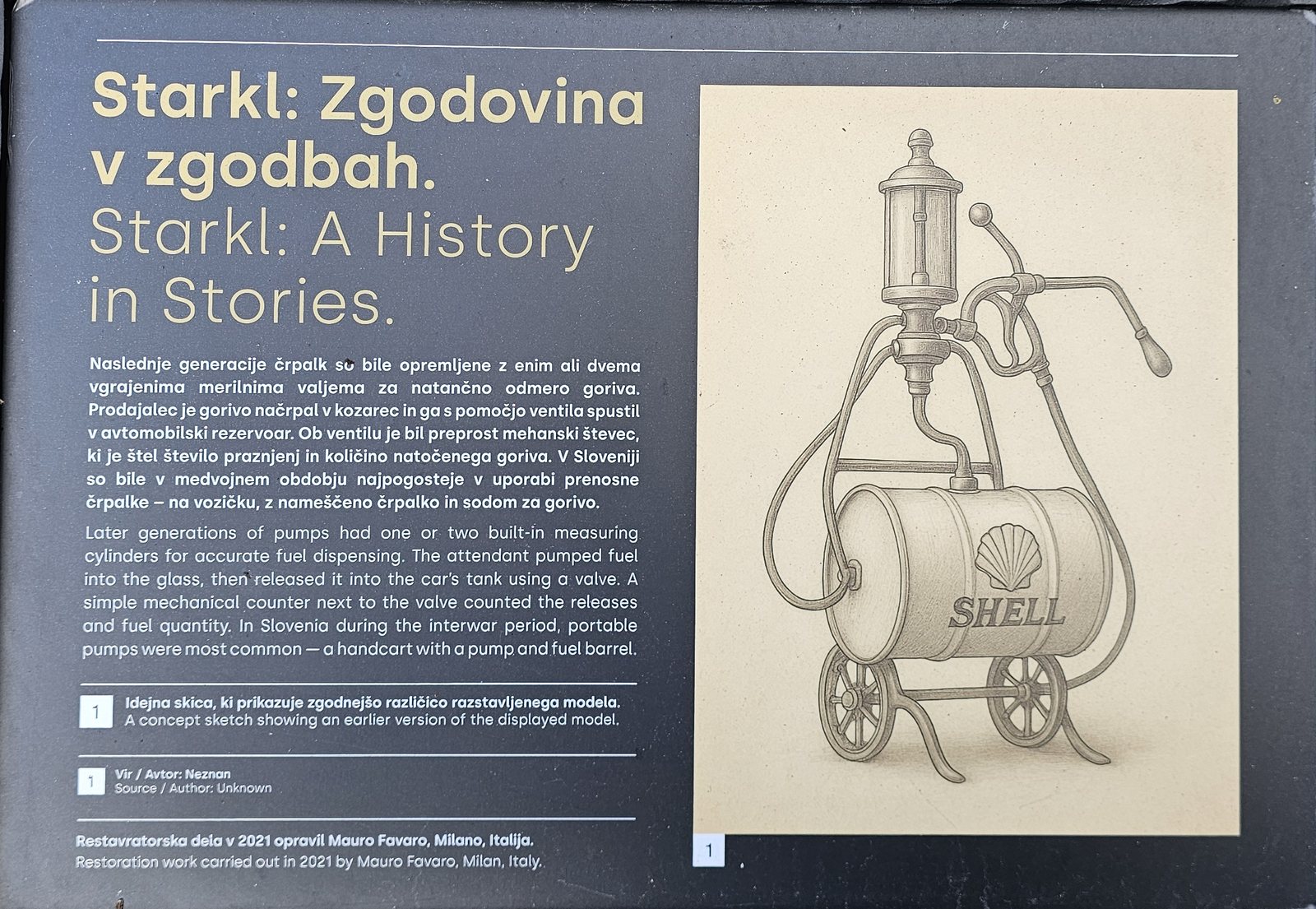
Later generations of pumps had one or two built-in measuring cylinders for accurate fuel dispensing. The attendant pumped fuel into the glass, then released it into the car's tank using a valve. A simple mechanical counter next to the valve counted the releases and fuel quantity. In Slovenia during the interwar period, portable pumps were most common: a handcart with a pump and fuel barrel.
The sketch on the panel shows an earlier version of the displayed model.
Cars beside the pump
The panel beside them speaks of Ford as an icon of the 20th century and of the first gas station above Mlino.
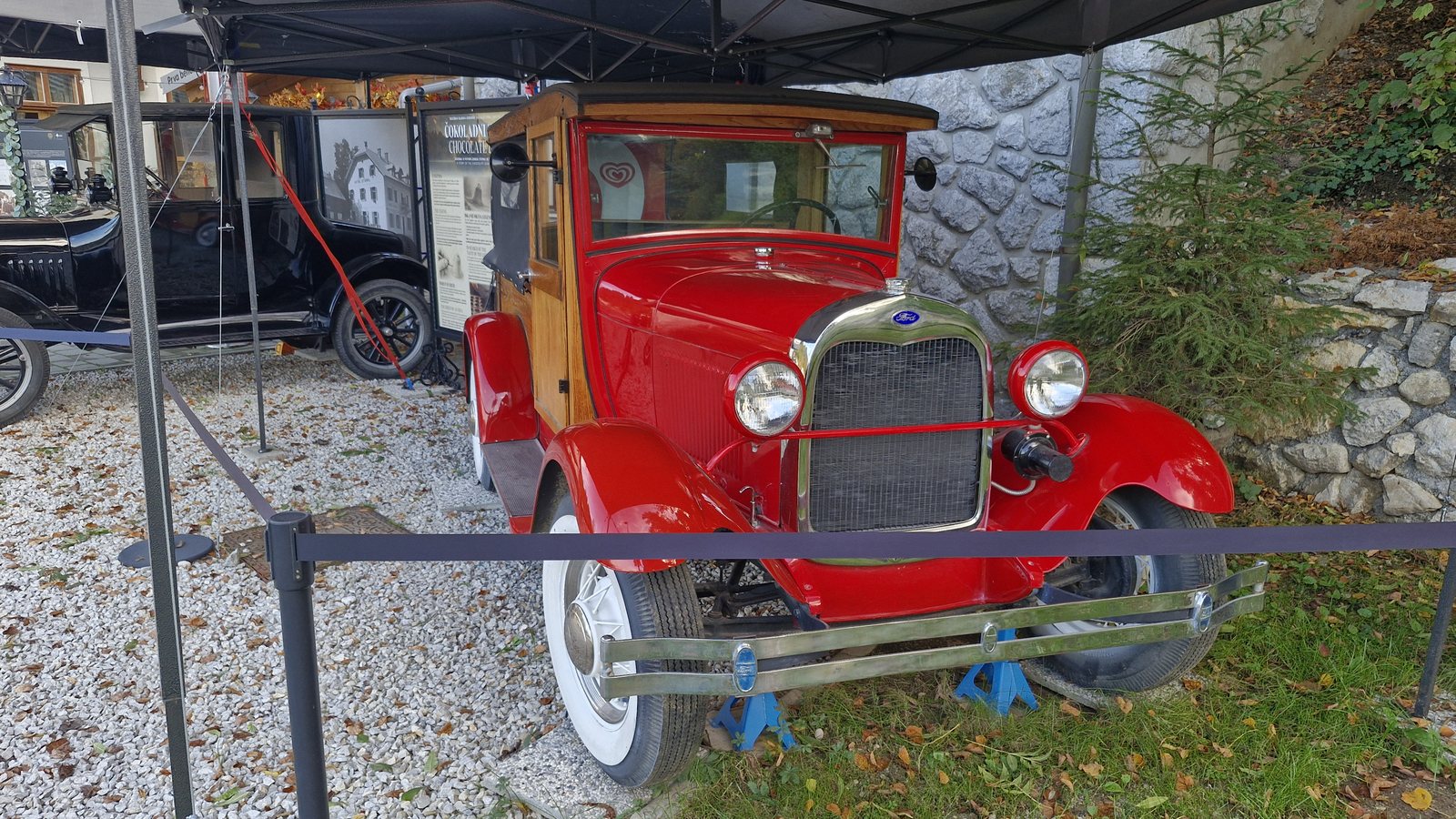
Ford A Huckster
Model year 1929. A delivery vehicle (pick-up) with the original wooden construction of the cargo section. Three-speed gearbox. Water-cooled four-cylinder, 3.3 l, 40 hp.
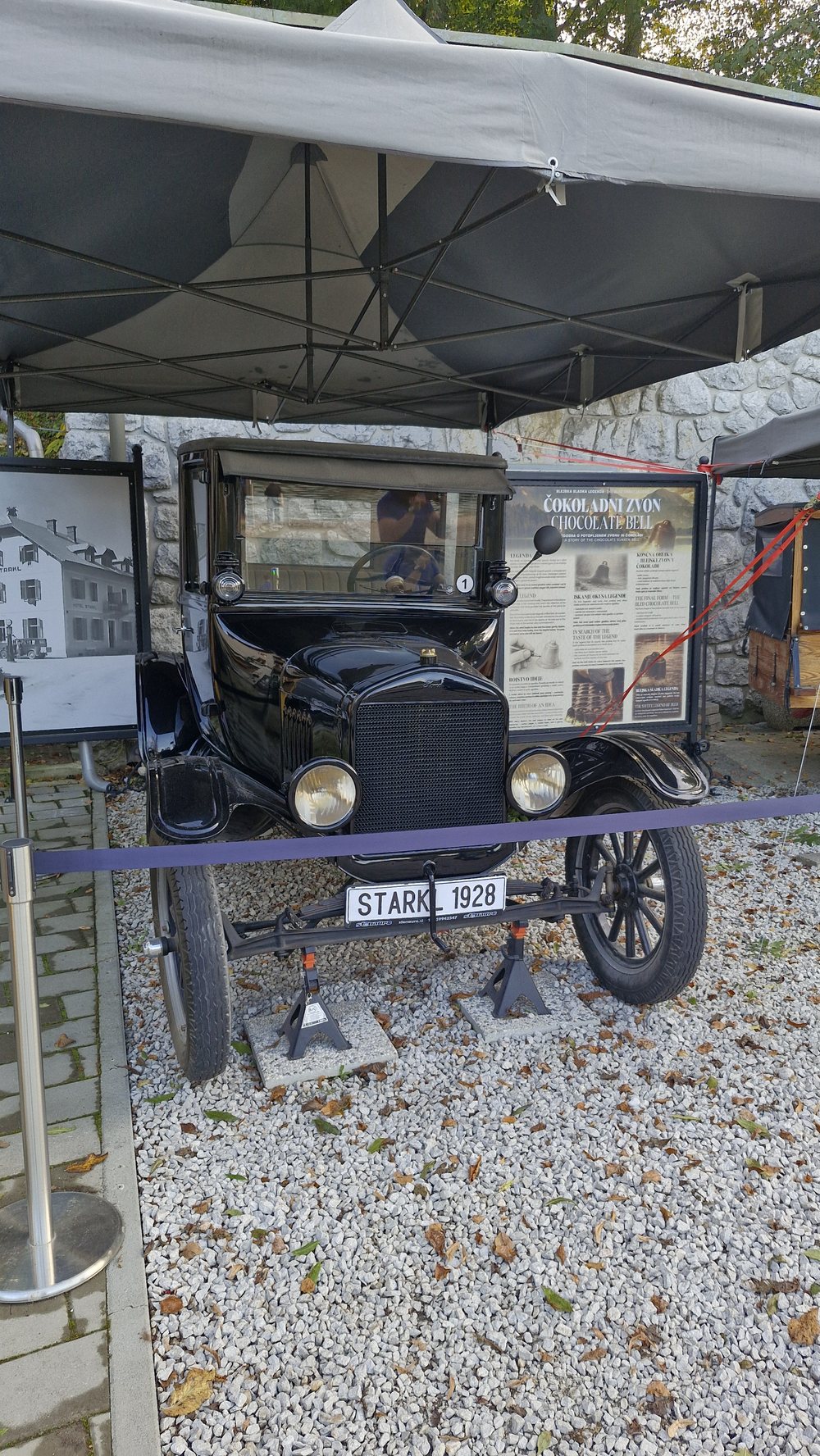
Ford T Doctor
Model year 1925. The Ford T was the first car to roll off an assembly line. Four-cylinder, 2.9 l, 20 hp, two-speed planetary gearbox.
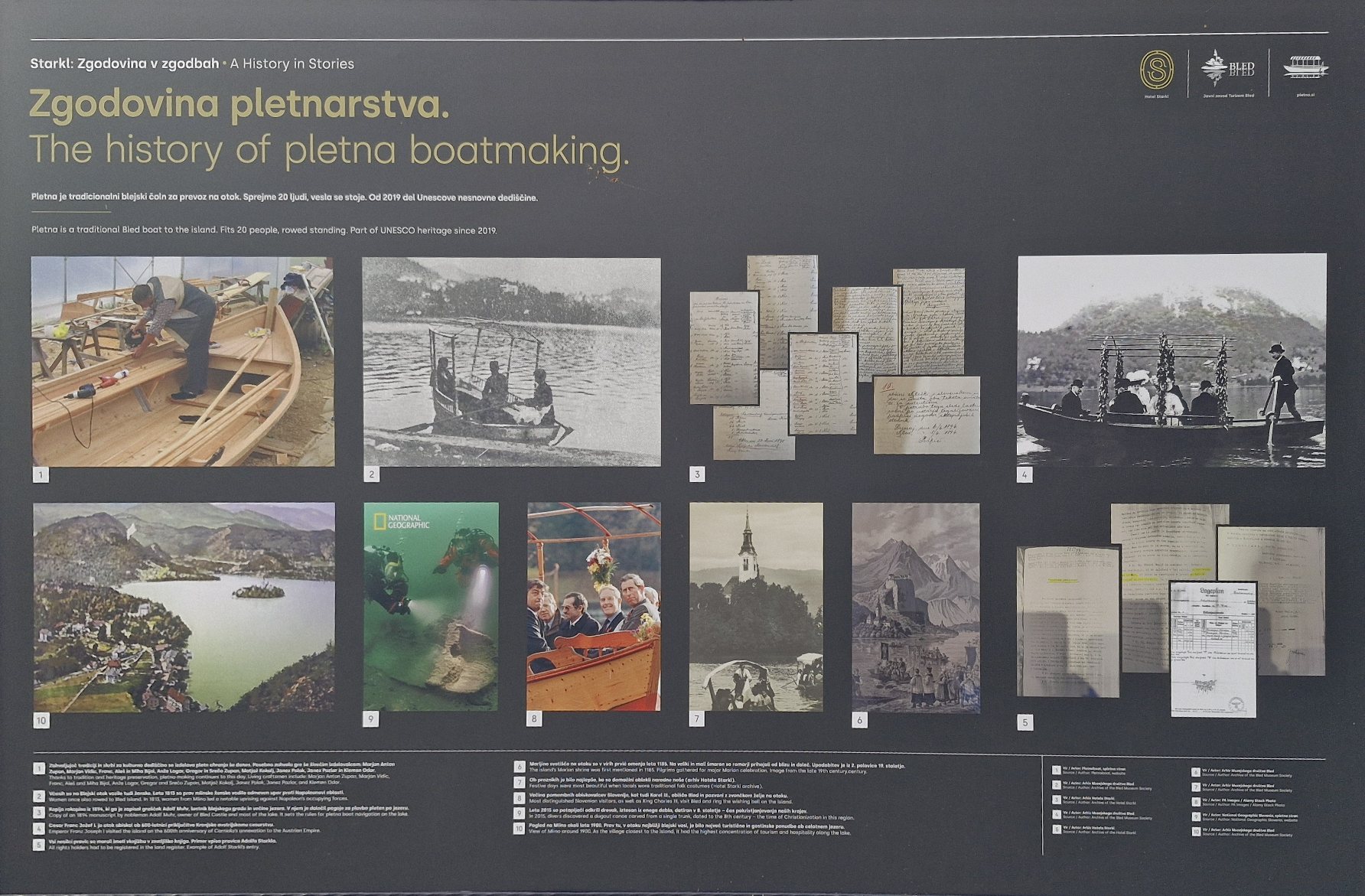
The history of pletna boatmaking
The pletna is a traditional Bled boat to the island. It fits 20 people and is rowed standing. It has been part of UNESCO heritage since 2019.
- In 1813 women from Mlino led a notable uprising against Napoleon's occupying forces; women once also rowed to Bled Island.
- An 1894 manuscript by nobleman Adolf Muhr, owner of Bled Castle and most of the lake, sets the rules for pletna navigation on the lake.
- Emperor Franz Joseph I visited the island on the 600th anniversary of Carniola's annexation to the Austrian Empire.
- The island's Marian shrine was first mentioned in 1185. Pilgrims gathered for the major Marian celebrations.
- In 2015 divers discovered a dugout canoe carved from a single trunk, dated to the 8th century, the time of Christianization in this region.
- King Charles III is among the most distinguished visitors who rang the wishing bell on the island.
The panel also names the craftsmen who keep the trade alive today.
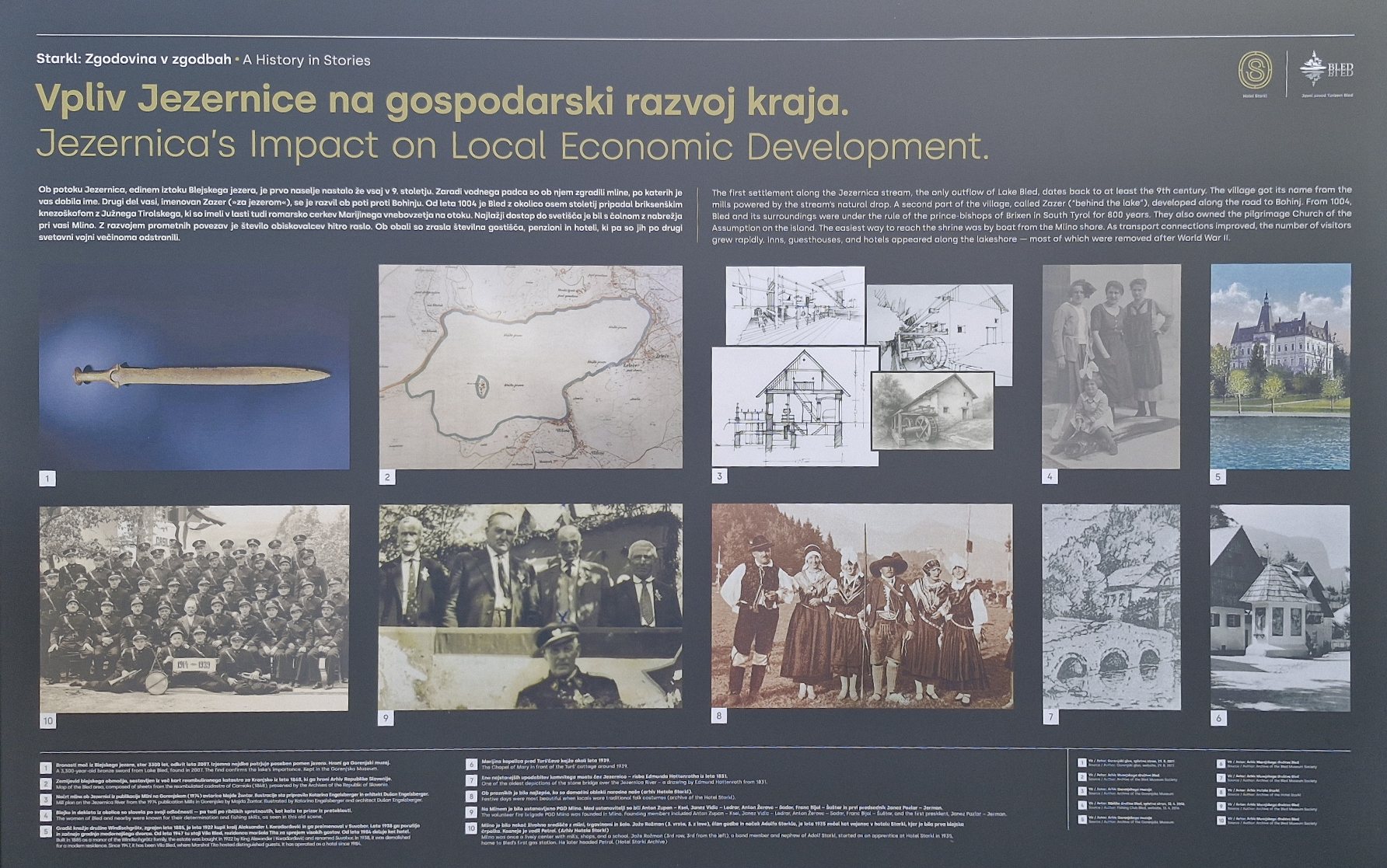
Jezernica's impact on local economic development
Along the stream flowing out of the lake stood the mills that gave the village of Mlino its name. The panel presents them with maps, mill plans and photographs from private archives.
- A 3,300-year-old bronze sword from Lake Bled, found in 2007. The find confirms the lake's importance. It is kept in the Gorenjska Museum.
- Six mills stood along the stream. Mlino was the centre of the Bled of that time, with a school, a shop and its own brass band.
- The first volunteer fire brigade, PGD Mlino, was founded in Mlino.
- The Windischgrätz family's castle of 1885 was bought in 1922 by King Alexander I Karađorđević; since 1947 Vila Bled has stood there, Marshal Tito's residence, operating as a hotel since 1984.
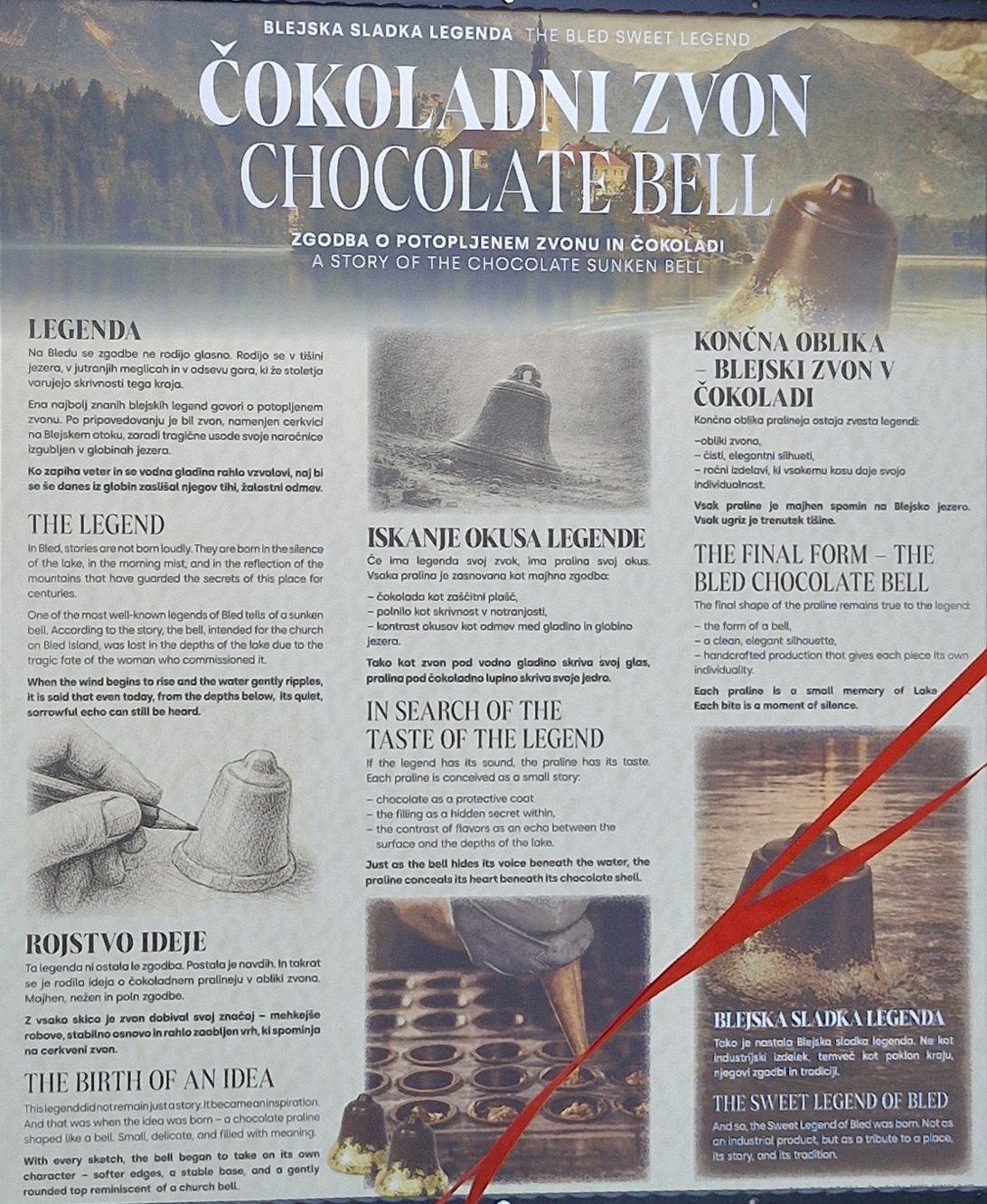
Chocolate Bell
In Bled, stories are not born loudly. They are born in the silence of the lake, in the morning mist, and in the reflection of the mountains that have guarded the secrets of this place for centuries.
One of the most well-known legends of Bled tells of a sunken bell. According to the story, the bell, intended for the church on Bled Island, was lost in the depths of the lake due to the tragic fate of the woman who commissioned it. When the wind begins to rise and the water gently ripples, it is said that even today, from the depths below, its quiet, sorrowful echo can still be heard.
The museum in summer
The museum is growing
The Starkl stables
Two new panels on the stables and on a stable hand named Tito. Bled had two Titos.
A replica of the bronze sword
A 3D replica of the sword on a concrete stand at the place of discovery. Permission to scan it has been obtained.
A new museum building
The neighbouring building currently houses a transformer station. If it moves, part of the museum will be set up there.
A sunken pletna
According to tradition, a pletna from the time of Maria Theresa and Prince Joseph rests beneath Grand Hotel Toplice; a way to raise it without damage is being studied.